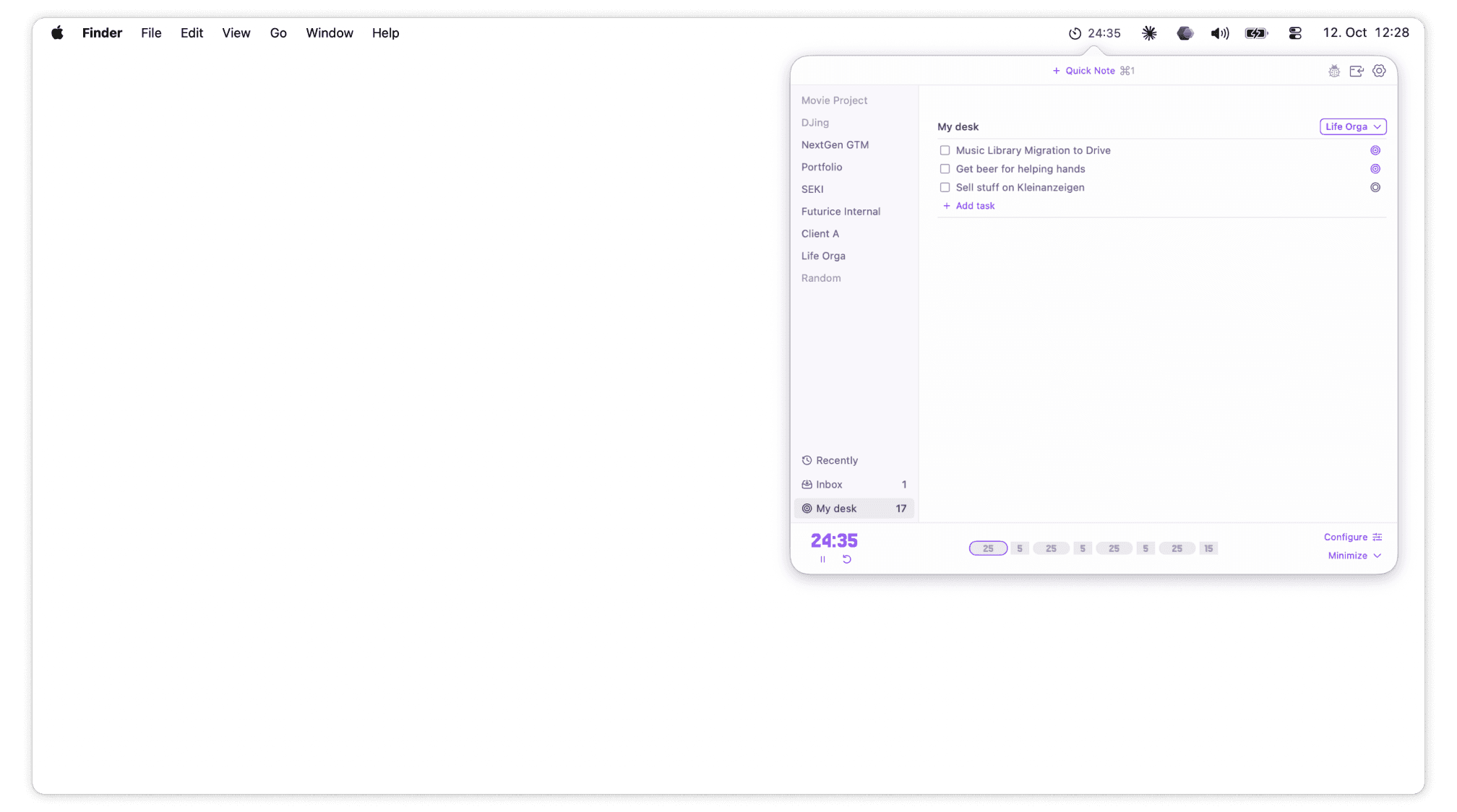
“SEKI began as a personal experiment and became a product I use every day. I designed every flow and shaped every component by hand. AI was the enabler that let me build it end to end.”
“I was sure I would learn an enormous amount on the way: about AI tooling, about the role of a designer's mindset and role across a whole product, and about owning every decision.”

Structure without the upkeep
Apple Notes matched how I capture thoughts, but it couldn't track projects and tasks in the same place properly. Notion could, yet it needed so much upkeep that I only opened it every now and then. Reminders on top never stuck.
What I wanted instead
Phase 1: A personal experiment
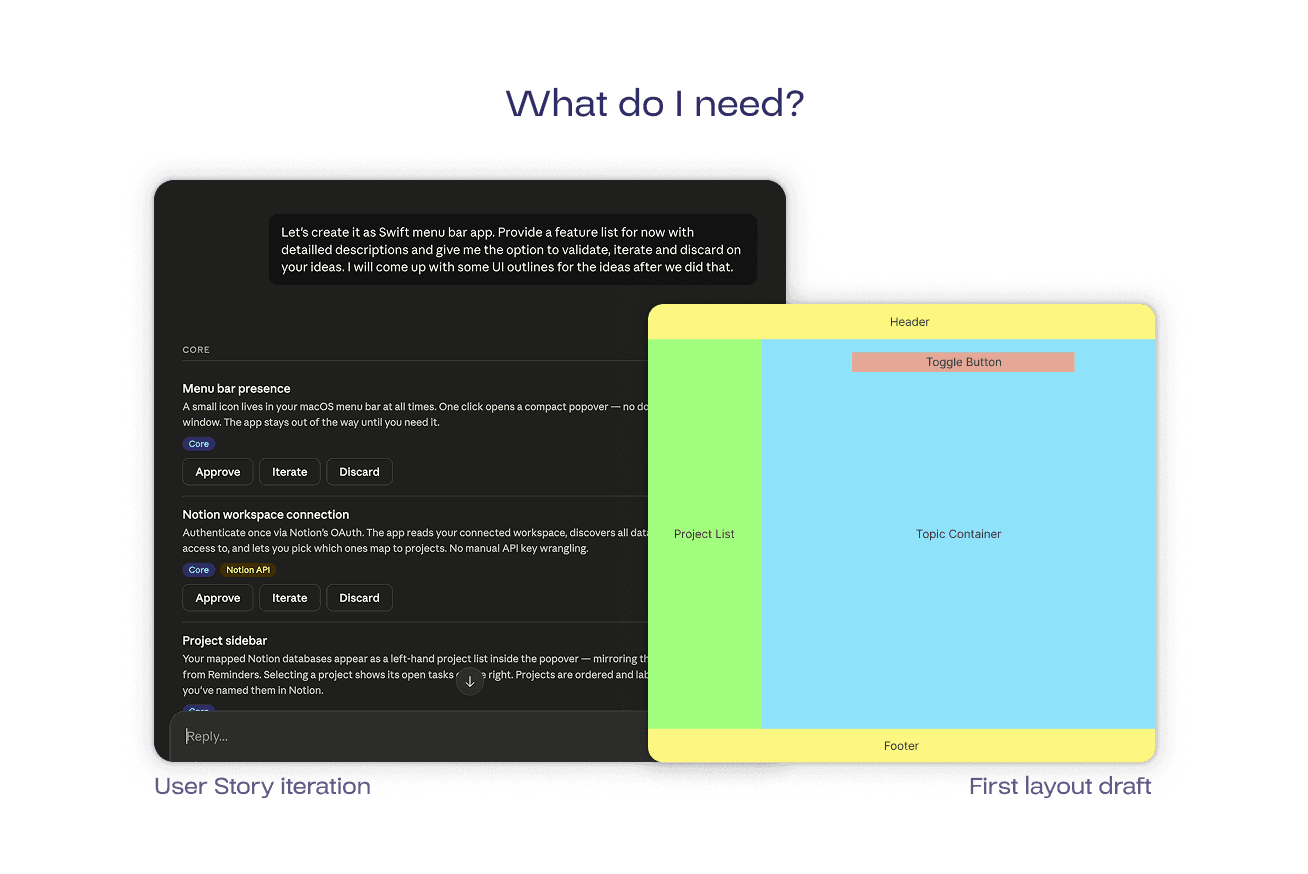
It started as NotionBar, a menu-bar popover that tunneled into my own Notion databases. I wrote the core user stories from my daily use, zoned the layout in Figma and had a SwiftUI scaffold running within a few days. Useful, but every action depended on Notion's API, account and database structure.
Phase 2: An app of its own
I realized I need to leave the Notion dependency behind. It lagged and anyone else would have had to precisely rebuild my database to use the app. So I left it and designed everything Notion provided from scratch.
Phase 3: An actual product
In July I poured some more days of unbroken focus into the App, to work through my huge list of user stories and already collected bugs. A sandboxed app, a brand, a pay-once model and an App Store plan followed. SEKI is now in pre-launch.


The menu bar is non-negotiable
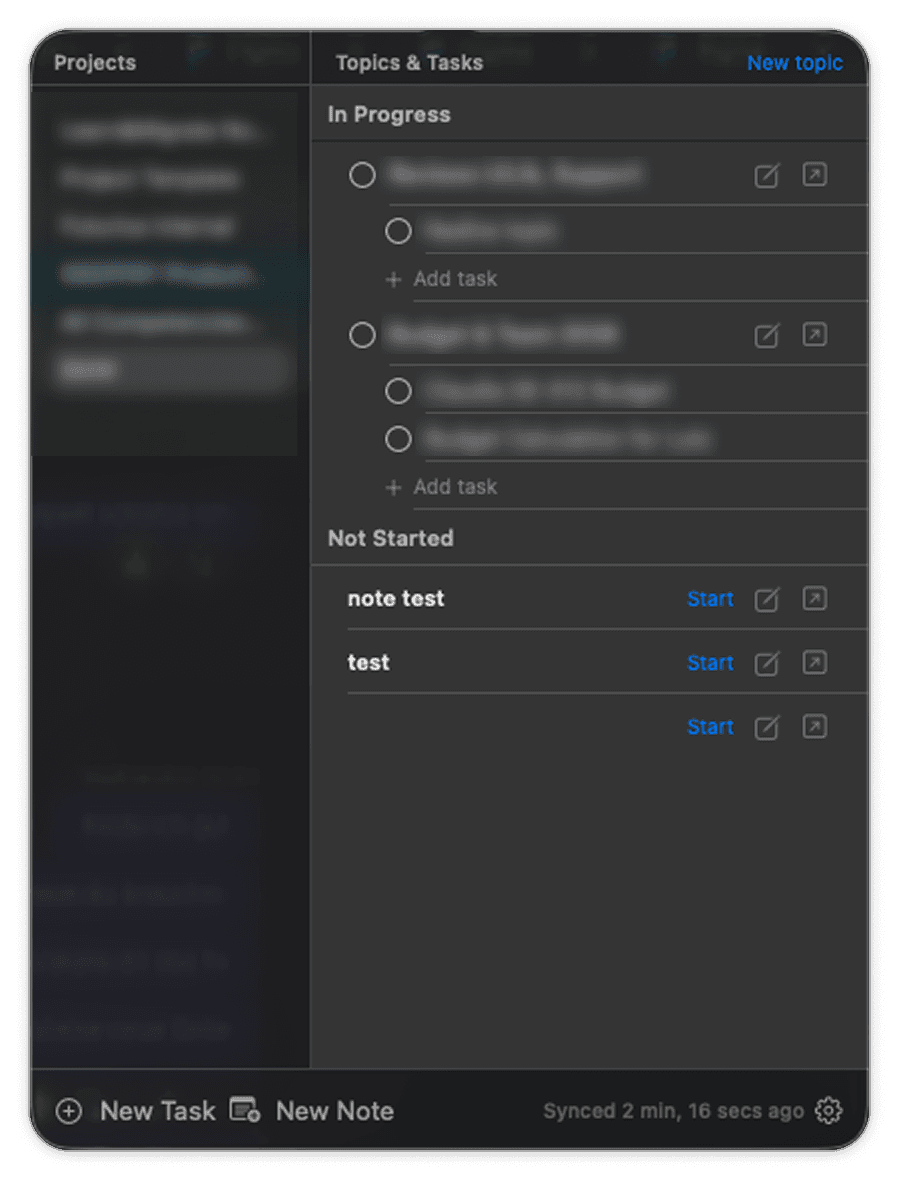
One rule shaped everything from day one: SEKI lives in the menu bar, always one click away. There's nothing to launch and nothing to switch to. It's also where the first name came from: NotionBar! A more easily accessible UI to reach my Notion data. Over time from there the product matured a lot though.
Why the name SEKI
SE from Sebastian, KI from Holzki. Seki is also a Japanese town with a long tradition of sword craft. That matches my intended brand: meticulous craft went into the tool, and it's made for people who want control and hands-on focus, instead of mindless automation and bloated (AI) features.